How to Treat Dehydrated Skin: Expert Tips & Remedies
The journey to treating dehydrated skin begins with a critical first step: figuring out if that’s really what you’re dealing with. The whole game plan is to first drench your skin in water-attracting ingredients, then seal all that goodness in to repair your skin's protective barrier. Get that right, and you're on your way to healthy, hydrated skin.
How to Tell if Your Skin Is Dehydrated or Dry
Before we dive into treatments, you have to be sure you aren't mistaking dehydration for its common look-alike: dry skin. This is hands-down the most frequent mix-up I see, and it sends people down the wrong path, slathering on heavy, oily creams that simply can't fix a water-related problem.
The difference seems subtle, but it's everything:
- Dehydrated skin lacks water. This is a temporary condition that can happen to anyone, even those with oily skin.
- Dry skin lacks oil (sebum). This is a permanent skin type you’re born with, defined by a chronic shortage of natural oils.
Once you understand this distinction, your entire approach to skincare can change for the better. Treating dehydration means adding water, while managing dry skin is all about supplementing oil.
This isn't a niche concern, either. The global market for products tackling skin dryness is set to become a massive $182.02 billion industry by 2030, largely because our modern lifestyles and environments are constantly stripping our skin of moisture. You can dig into the full research on this growing market for a deeper look at the trends.
To make this crystal clear, let's break down the key differences side-by-side.
Dehydrated Skin vs Dry Skin at a Glance
This table simplifies how to tell these two common concerns apart, from how they feel to what they need.
| Characteristic | Dehydrated Skin | Dry Skin |
|---|---|---|
| Primary Cause | Lack of water | Lack of natural oil (sebum) |
| How It Feels | Tight, taut, sometimes oily on the surface | Rough, scaly, persistently "dry" feeling |
| Appearance | Dull, lackluster, fine lines, dark circles | Flaky patches, redness, small pores, fine lines |
| Treatment Focus | Add water (humectants) and seal it in | Add oil (emollients) and support the barrier |
Recognizing which column your skin falls into is the first major victory in getting it back to a healthy state.
Spotting the Signs of Dehydration
Dehydrated skin can be tricky because its symptoms often masquerade as other issues. Still, there are a few tell-tale signs that point directly to a lack of water.
A classic giveaway is that feeling of tightness, almost like your skin is a size too small, which often feels worse right after you wash your face. The confusing part? Your skin can feel tight and look oily at the same time. That's your skin's desperate attempt to overproduce oil to make up for the water it's missing.
Another huge clue is the sudden appearance of fine, papery lines. These aren't the deep wrinkles that come with age; they're superficial creases that pop up when your skin cells are "deflated" from thirst. You might also notice your complexion looks dull and flat, and dark under-eye circles suddenly look more pronounced.
Expert Tip: The quickest way to check for dehydration at home is the "pinch test." Gently pinch a small bit of skin on your cheek or the back of your hand. If it takes a moment to snap back, your skin is likely thirsty. Well-hydrated skin bounces back almost instantly.
Why Your Skin Type Matters
Your underlying skin type is a huge piece of the puzzle. If you know you have oily or combination skin but are suddenly experiencing tightness and dullness, dehydration is almost certainly the culprit. Your goal is to add water without adding heavy oils that might clog your pores.
On the other hand, if you have a naturally dry skin type, you're much more prone to dehydration. Why? Because your skin's protective lipid barrier is already a bit weak, allowing water to escape more easily. For you, the solution is a two-pronged attack: replenish water with humectants and seal it in with barrier-supporting oils and ceramides.
This chart really drives home just how much of an impact dehydration has on your skin's health and appearance.
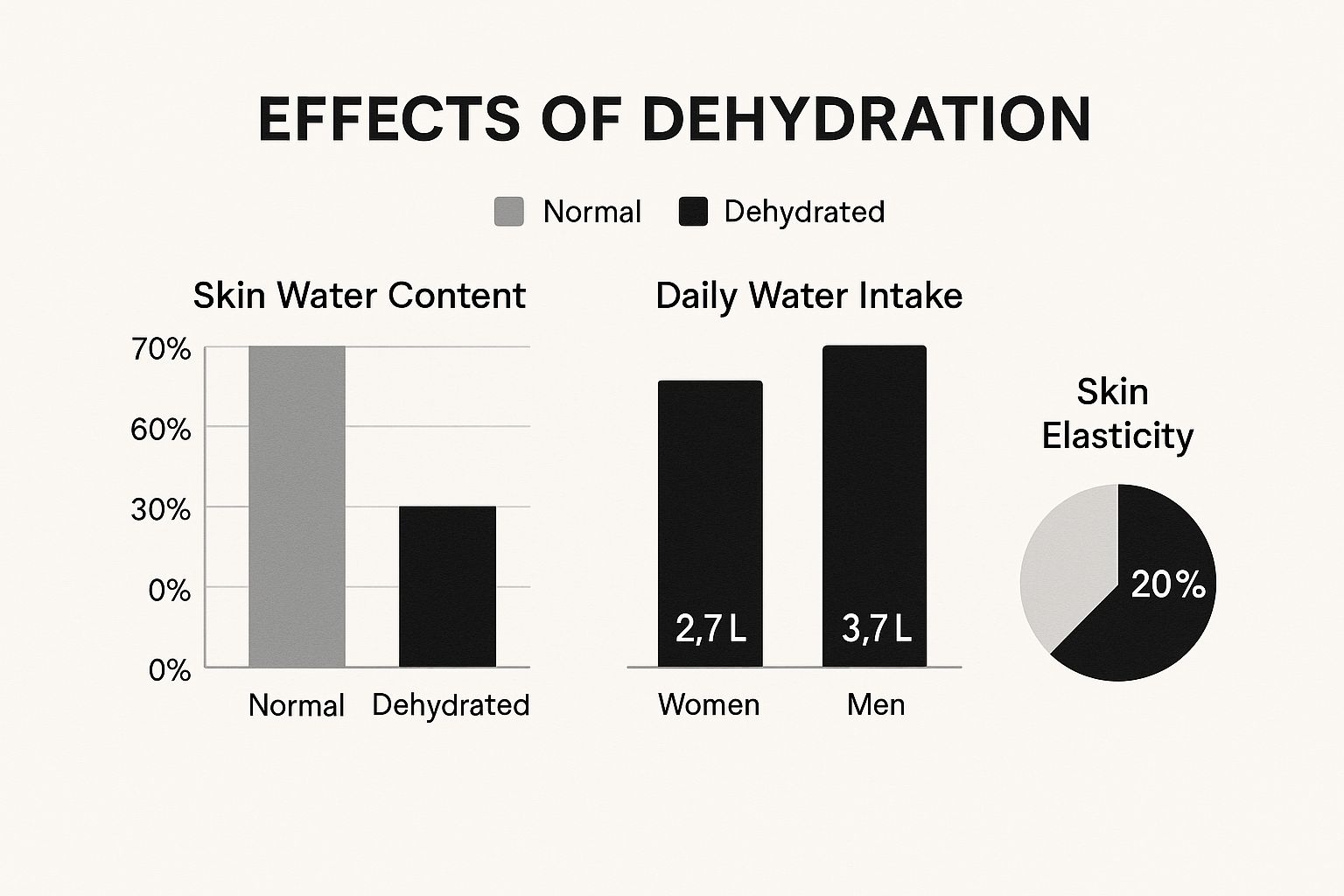
The data speaks for itself. Dehydration can slash your skin's water content by more than half, leading to a direct and visible drop in elasticity and that plump, bouncy feel we all want.
Building Your Ultimate Skin Hydration Routine
Fixing dehydrated skin isn't about finding a single miracle product. It's about creating a smart, multi-layered system that gets water into your skin and, just as importantly, keeps it there. Think of it as building a fortress for moisture. The strategy is simple: drench your skin with hydration at every opportunity, then lock it down so it can't escape.
The demand for products that do this is huge. The global market for treating dehydrated skin was valued at USD 6.75 billion and is expected to climb to an incredible USD 15.35 billion by 2031. You can see the full data on this expanding skincare market for yourself.
This boom means there are more options than ever, which can feel overwhelming. So, let's cut through the noise and build a routine that actually works.
The Foundation: Your Gentle Cleanse
The very first step in your routine can either set you up for success or completely sabotage your efforts. When your skin is dehydrated, a harsh, stripping cleanser is your worst enemy. That tight, squeaky-clean feeling? That's the sound of your skin's precious protective oils being washed away, leaving your moisture barrier weak and exposed.
Instead, you need a cleanser that plays nice. Look for:
- Creamy or milky formulas: These cleanse without all the foam and fury, respecting your skin's natural lipids.
- pH-balanced labels: A cleanser with a pH around 5.5 helps maintain your skin's naturally acidic state, which is crucial for a healthy barrier.
- Helpful ingredients: Look for hydrators like glycerin or hyaluronic acid, even in your face wash.
Your cleanser should be a gentle gatekeeper. Its job is simply to remove makeup, sunscreen, and the day's grime without upsetting your skin's delicate balance.
Layering Hydration: The Damp Skin Secret
Here’s a tip that I tell every client, because it makes a massive difference: always apply your hydrating products to damp skin. After cleansing, just gently pat your face with a towel, but leave it slightly damp. This simple trick turns your skin into a sponge, making it far more receptive to whatever you apply next.
This is where your hydrating toners, essences, or mists shine. They are your first, essential layer of liquid hydration. Applying a hyaluronic acid serum to bone-dry skin can sometimes backfire, pulling moisture from the deeper layers of your skin to the surface. But when you apply it to a damp face, it pulls that surface water into your skin, kicking off the rehydration process instantly.
Your goal is to create thin, watery layers of hydration. Think of it like painting a wall. You wouldn't slap on one thick, goopy coat of paint. You get the best, most even coverage by applying several thin coats. Your skin works the same way.
The Powerhouse Step: Serums
Serums are your targeted problem-solvers. For dehydrated skin, that means a serum loaded with humectants—ingredients that act like magnets for water, attracting and binding it to your skin. This is your main "add water" step.
Your best friends here are humectants like:
- Hyaluronic Acid: The famous hydrator that can hold up to 1,000 times its weight in water.
- Glycerin: A true classic. It's reliable and effective at pulling moisture into the skin's top layer.
- Beta-Glucan: An unsung hero that's actually more hydrating than hyaluronic acid and has fantastic soothing properties.
- Panthenol (Pro-Vitamin B5): A multi-tasker that's both a humectant and an emollient, so it hydrates and helps heal the skin barrier.
When you apply your serum, press it gently into your still-damp skin. This helps the active ingredients penetrate more effectively instead of just sitting on top.
Sealing the Deal: The All-Important Moisturizer
This final step is completely non-negotiable. It’s pointless to apply all those wonderful hydrating layers if you don't lock them in. Without a moisturizer, all that water you just added will simply evaporate into the air—a process known as transepidermal water loss (TEWL).
Your moisturizer acts as a lid for your skincare "pot," sealing in all the goodness and reinforcing your skin's barrier. The right one for you depends on your skin type:
- For Oily or Combination Skin: A lightweight gel-cream will provide that seal without feeling heavy or greasy.
- For Normal to Dry Skin: A richer lotion or cream is your best bet. These often contain both humectants and emollients (like ceramides or squalane) to hydrate and fortify the barrier at the same time.
A compromised barrier is often the real culprit behind dehydration. To dive deeper into this, check out our guide on how to repair your skin barrier. Getting this right is the key to lasting results.
Putting It All Together: Sample Routines
Let's make this real. Here’s what a simple but highly effective morning and evening routine can look like.
Morning (AM) Routine
- Cleanse (Optional): A splash of lukewarm water is often enough. If you’re oily, use your gentle cream cleanser.
- Hydrating Toner/Mist: Apply to your damp face.
- Hydrating Serum: Press in your humectant-rich serum.
- Moisturizer: Lock in all that hydration.
- Sunscreen (Crucial!): Finish with a broad-spectrum SPF 30 or higher. Sun exposure is a primary driver of barrier damage and dehydration.
Evening (PM) Routine
- Double Cleanse: Start with an oil or balm cleanser to melt away makeup and SPF. Follow with your gentle cream cleanser.
- Hydrating Toner/Essence: Apply to damp skin to prep for what's next.
- Hydrating Serum: Add your main layer of water-based hydration.
- Moisturizer: Use a formula that’s a bit richer than your daytime one to support your skin's overnight repair process and prevent moisture loss while you sleep.
This consistent, layered approach gives your skin a constant supply of water and helps it remember how to hold onto it, effectively teaching it how to stay hydrated all on its own.
The Best Ingredients for Rehydrating Your Skin
Trying to decipher a product's ingredient list can feel like you need a chemistry degree. But to really tackle dehydrated skin, you have to become a savvy shopper. You need to know which ingredients truly deliver water to your thirsty skin cells—and, just as importantly, which ones will keep it there.
From my experience, the best strategy for rehydration is a two-pronged attack. First, you need to attract water. Then, you have to prevent that water from escaping. Let's break down the powerhouse ingredients that accomplish both, so you can confidently pick products that actually work.
The Water-Attractors: Humectants
Humectants are the undisputed stars of the hydration show. Think of them as tiny moisture magnets, pulling water from the air and from the deeper layers of your skin up to the surface.
To feel comfortable, your skin's outermost layer (the stratum corneum) needs a water content of about 30% to 50%. When it dips below that threshold, you get that familiar tight, papery feeling. This is where humectants shine.
Here are a few of the best ones to look for:
Hyaluronic Acid (HA): This is the most famous humectant for good reason—it can hold up to 1,000 times its weight in water. But a quick tip: not all HA is created equal. Look for formulas with multiple molecular weights. Smaller molecules penetrate deeper for lasting hydration, while larger ones sit on the surface for an immediate plumping effect.
Glycerin: A true workhorse in skincare, glycerin is a reliable and effective humectant that pulls moisture into the skin's top layer. It’s incredibly gentle and found in countless hydrating products, from cleansers to creams. It’s a classic for a reason.
Beta-Glucan: Often overlooked, beta-glucan is a seriously impressive humectant derived from oats or yeast. Some studies even suggest it’s more hydrating than hyaluronic acid. As a bonus, it has incredible soothing properties, making it perfect for skin that’s both dehydrated and irritated.
Panthenol (Pro-Vitamin B5): This is a brilliant multi-tasker. It's a fantastic humectant that draws water into the skin, but it also has emollient properties that help smooth and soften. On top of that, it actively supports your skin's natural repair processes.
Expert Tip: Don't just pick one. The most effective approach is to find a product with a cocktail of different humectants. This creates a more robust, multi-level hydration effect that quenches your skin’s thirst far more completely than a single-ingredient product can.
The Gatekeepers: Barrier-Supporting Ingredients
Attracting all that water is only half the battle. If your skin's protective barrier is damaged, that precious hydration will evaporate straight into the air. This process even has a name: Transepidermal Water Loss (TEWL).
That’s where barrier-supporting ingredients come in. They act like the mortar between your skin cell "bricks," sealing in moisture and keeping irritants out. For a long-term fix for dehydration, these are non-negotiable.
Ceramides: The Building Blocks
Think of ceramides as the literal glue holding your skin barrier together. These lipids naturally make up about 50% of your epidermis. When your ceramide levels drop, your barrier becomes weak and leaky, letting water out and irritants in.
Replenishing your skin with a ceramide-rich moisturizer is like giving it the raw materials it needs to patch up the cracks and rebuild its own defenses. They are essential for anyone whose skin feels tight and looks dull.
Squalane: The Protective Seal
Squalane is another hero for barrier support. It's a wonderfully lightweight, non-comedogenic oil that mimics your skin's natural sebum. It provides just enough of a seal to prevent water loss without feeling heavy or greasy.
This makes it a fantastic choice even for those with oily or acne-prone skin that's still secretly dehydrated. It forms a soft, breathable film that not only locks in moisture from your serums but also leaves your skin feeling exceptionally soft and smooth to the touch.
Top Hydrating Ingredients and Their Functions
To make it even simpler, here's a quick reference table breaking down the roles of these key players. I often show this to clients who are feeling overwhelmed by ingredient lists.
| Ingredient | Primary Function | Best For | Example Product Type |
|---|---|---|---|
| Hyaluronic Acid | Attracts and holds water | All skin types, especially for plumping | Serums, Essences |
| Glycerin | Draws moisture to the surface | All skin types, a universal hydrator | Cleansers, Moisturizers |
| Ceramides | Rebuilds the skin barrier | All skin types, especially compromised skin | Moisturizers, Creams |
| Squalane | Seals in moisture, softens skin | Oily, Combo, and Normal skin | Facial Oils, Moisturizers |
Understanding what these ingredients do empowers you to look past marketing fluff and choose products based on what will actually deliver results.
If you want to see these ingredients in action, you can explore our curated selection of professional-grade skincare products specifically chosen to restore hydration and barrier health. After all, knowing what’s inside the bottle is the key to finally getting the comfortable, glowing skin you want.
What You Do Every Day Matters for Lasting Hydration
While a great skincare routine is non-negotiable, what you do outside of your bathroom probably has an even bigger impact on your skin's hydration. To get that deep, lasting glow, we have to look beyond the bottle and at our daily habits.
Think of it this way: your products are constantly trying to top up your skin's moisture reserves. But certain lifestyle factors can act like tiny leaks in that reserve, draining water away faster than you can put it back. Sealing those leaks from the inside out is the secret to getting off the dehydration roller coaster for good.
Spot the Sneaky Dehydration Triggers
Some of our daily rituals can, unfortunately, work directly against our hydrating serums and creams, leading to that familiar cycle of tightness and dullness. The first step is figuring out what they are.
For instance, that morning coffee or happy hour cocktail might be bigger culprits than you think. Both caffeine and alcohol are diuretics, meaning they make your body get rid of water. When you overdo it, your skin is one of the first places to pay the price.
This doesn't mean you have to cut them out completely! It’s all about balance. A simple pro tip I give my clients is to drink a glass of water for every coffee or alcoholic drink they have. It’s a small tweak that really helps counteract the drying effects and makes a noticeable difference.
Eat and Drink Your Way to Plump Skin
What you eat is one of the most powerful tools in your arsenal for supporting your skin's moisture. You can literally build a more hydrated, resilient complexion from your grocery list by focusing on water-rich foods and key nutrients that strengthen your skin barrier.
Your skin's outermost layer, the stratum corneum, needs to be made up of 30% to 50% water to function properly and feel comfortable. A smart diet supports this balance from the inside, giving your topical products a foundation to build on.
Try working these foods into your diet to give your skin an internal drenching:
- High-Water-Content Produce: Think cucumber, watermelon, celery, and strawberries. They are packed with water and hydrate your entire system.
- Essential Fatty Acids (EFAs): These are non-negotiable for a healthy skin barrier. You can find them in foods like salmon, walnuts, chia seeds, and flaxseeds. EFAs are the building blocks for the lipids that lock moisture in.
Take Control of Your Surroundings
Your environment directly and constantly influences your skin. Low humidity is a major issue—it essentially acts like a magnet, pulling moisture right out of your skin in a process called transepidermal water loss (TEWL). But a few simple changes can turn your space into a hydration sanctuary.
One of the best things you can do for dehydrated skin is get a humidifier. I recommend running one in your bedroom overnight. This creates a moisture-rich bubble around you, preventing your skin from drying out while you sleep. You’ll wake up looking and feeling plumper and more comfortable.
Also, take a look at your shower routine. I know long, hot showers feel amazing, but that heat strips the natural oils right off your skin, compromising your moisture barrier. Try to keep showers lukewarm and brief. These small, consistent changes create an environment where your skincare can finally do its best work, helping you achieve that healthy, lasting glow.
Professional Treatments for When Your Skin Needs More
Sometimes, even the most diligent at-home skincare routine hits a plateau. If you’ve been layering your hydrating serums and slathering on barrier creams but your skin still feels tight, dull, and parched, it might be time to call in the professionals. In-office treatments can offer that powerful reset your skin is craving, working on a much deeper level than anything you can apply at home.
Think of it as a powerful catalyst. A professional treatment can give your skin a massive infusion of hydration, breaking the cycle of chronic dehydration and making your daily products work that much better.
Injectable Skin Boosters: The Ultimate Thirst Quench
One of the most effective ways we can tackle severe dehydration head-on is with injectable skin boosters. These are not the same as dermal fillers meant to add volume or sculpt your features. Skin boosters have one job and one job only: to deeply and profoundly hydrate the skin from within.
The magic is in the delivery. We place tiny micro-droplets of hyaluronic acid (HA) directly into the dermis, completely bypassing the surface barrier that topical serums have to contend with. This isn’t a temporary surface glow; it’s a fundamental improvement in your skin’s health, resulting in better elasticity, smoothness, and a lasting radiance.
It's no surprise that the skin booster market, currently valued at USD 1.57 billion, is projected to hit USD 3.3 billion by 2030. More and more people are realizing that this approach fundamentally improves skin quality from the inside out.
Other Powerful Professional Options
While skin boosters are a game-changer, they aren't the only tool in our arsenal. Several other professional facials can do wonders for thirsty skin, each working a bit differently to cleanse, gently exfoliate, and infuse the skin with much-needed moisture.
Here are a couple of favorites I often recommend:
- HydraFacials: This is a fantastic multi-step treatment that does it all—it cleanses, exfoliates, extracts, and then floods the skin with customized, intensive serums. It’s perfect for getting an immediate glow and hydration boost with absolutely no downtime.
- Oxygen Facials: This treatment feels incredible. It involves a stream of high-pressure oxygen, infused with nourishing serums, being sprayed onto the skin. The idea is that the oxygen helps your skin drink up all those hydrating ingredients, leaving it looking plump, dewy, and refreshed.
We can also use other treatments, like microneedling, to create the perfect pathway for hydration. The tiny micro-channels from a microneedling session allow hydrating serums to penetrate far deeper than they ever could on their own. You can explore more about the benefits of professional microneedling to see how it can amplify results.
Finding the Right Practitioner Is Everything
Deciding to get a professional treatment is a big step, and your success—and safety—hinges entirely on the person performing it. Please, make sure you seek out a licensed and experienced aesthetician or medical professional.
When you go in for a consultation, don't hold back. Ask questions! A true professional will take the time to properly assess your skin, listen to your concerns, and clearly explain why a particular treatment is the right fit for your unique situation. They should be able to walk you through the entire process, from what to expect during the procedure to the best post-treatment care to protect your investment. Your comfort and confidence in their expertise are non-negotiable.
Common Questions About Dehydrated Skin
Even with a perfect plan, you're bound to have questions when tackling dehydrated skin. It’s a tricky and often misunderstood issue. Let's walk through some of the questions I hear most often from clients to help clear things up and get your skin back on track.
One of the first things everyone wants to know is how long it will take to see a real difference. While you might feel some instant relief after applying a good hydrating serum—that awful tightness finally eases up—lasting change requires a bit of patience.
True skin barrier repair and rehydration don't happen overnight. It typically takes at least 28-30 days, or one full skin cell turnover cycle, to see a significant, stable improvement. Consistency is far more important than any single product.
This waiting period often brings up another big concern. If my skin is already so compromised, should I even think about exfoliating?
Can I Still Exfoliate Dehydrated Skin?
Yes, you can, but you have to be incredibly smart about it. Dehydration often leads to a buildup of dead skin cells, which is what makes your complexion look dull and rough. Gently removing that layer is key to helping your hydrating products actually sink in and do their job.
The absolute golden rule is to avoid harsh physical scrubs at all costs. Think of them as sandpaper on an already fragile surface—they'll just create more damage and micro-tears in your moisture barrier. Instead, opt for a very gentle chemical exfoliant, but only use it once or twice a week, max.
- Lactic Acid: This is a fantastic option because it’s a double-duty ingredient. It exfoliates gently while also acting as a humectant, pulling moisture into the skin.
- Mandelic Acid: Because of its larger molecule size, mandelic acid penetrates the skin much more slowly. This makes it exceptionally gentle and a perfect match for sensitive, dehydrated skin.
If you ever see redness or feel irritation after exfoliating, stop immediately and give your skin a break. Healing your barrier is the number one priority.
Why Is My Oily Skin Still Tight?
This is the ultimate paradox of dehydrated skin and, frankly, one of the most frustrating skin situations to be in. It’s a classic sign that your skin is producing plenty of oil but has virtually no water.
What’s usually happening here? The most common culprit is a history of using harsh, stripping cleansers or aggressive mattifying products to fight the oil. These products completely demolish your skin's moisture barrier. In a panic, your skin ramps up oil production even more to try and protect itself, leaving you with a greasy yet uncomfortably tight and parched feeling underneath.
The fix is to switch gears entirely. Move to a gentle, non-foaming cleanser and start using lightweight, oil-free hydrators like a gel-cream. This will restore water balance without adding any extra shine.
Finally, so many people ask if the answer is just to drink more water. While staying hydrated internally is crucial for your overall health and definitely supports your skin, it's almost never the complete solution on its own. Dehydrated skin is a topical problem caused by a damaged barrier that can't hold onto water. You have to pair good hydration habits with a targeted skincare routine that repairs that barrier from the outside.
At Olive Skin Therapy, we specialize in creating personalized treatment plans that get to the root of your skin concerns. If you're struggling to fix dehydrated skin, book a consultation and let us build a routine that delivers real, lasting results. Learn more about our approach at oliveskintherapy.com.