
6 Best Facial for Acne Scars Treatments for 2025
Acne may be temporary, but the scars it leaves behind can feel like a permanent reminder of past breakouts. Navigating the path to smoother, clearer skin often seems overwhelming, with countless treatments all promising miraculous results. But what truly works? This guide cuts through the noise to provide a definitive roundup of the most effective, professionally administered treatments that stand as the best facial for acne scars. We move beyond temporary fixes and delve into powerful solutions designed for lasting change.
This comprehensive listicle will explore the science behind how each method tackles different types of scars, from stubborn ice-pick and boxcar depressions to rolling textural irregularities. Understanding these distinctions is crucial for selecting a treatment that genuinely addresses your unique skin concerns.
We will provide an in-depth look at what to expect during each procedure, the necessary recovery time, and which options deliver the most significant, lasting improvements. You will gain specific, actionable insights into premier treatments like Chemical Peels, Microneedling, and Fractional Laser Resurfacing. This guide equips you with the essential knowledge to make an informed decision, helping you move beyond simply covering up scars and begin the process of healing them from within.
1. Chemical Peels
A chemical peel is a powerful skin-resurfacing procedure that stands out as one of the best facial treatments for acne scars. It involves applying a carefully selected acid solution to the skin, which works to remove the damaged outer layers. This controlled exfoliation triggers the body's natural healing response, accelerating cell turnover and, most importantly, stimulating the production of new collagen and elastin.
This process is what makes peels so effective. By encouraging fresh, undamaged skin to rise to the surface, peels can significantly diminish the appearance of superficial scars, improve skin texture, and even out pigmentation left behind by past breakouts. Brands like PCA Skin, SkinMedica, and those developed by pioneers like Dr. Zein Obagi have perfected formulations that target various levels of scarring with precision.
How Different Peels Target Specific Scars
The versatility of chemical peels lies in their ability to be customized. Not all peels are created equal, and a skilled esthetician will choose a specific type and strength based on your unique scar types and skin condition.
For Widespread Surface Scarring: A series of lighter peels, such as a Jessner's peel or a lower-concentration VI Peel, can be highly effective. These medium-depth peels are excellent for treating post-inflammatory hyperpigmentation (the dark spots left after acne) and shallow, atrophic scars. Studies on the VI Peel, for example, have shown an impressive 40-60% improvement in acne scarring after a series of treatments.
For Deeper, Pitted Scars: Deeper scars, like boxcar or ice-pick scars, require a more targeted approach. The TCA CROSS (Chemical Reconstruction of Skin Scars) technique uses a high concentration of trichloroacetic acid (TCA) applied precisely to the base of individual scars. This localized application causes a deep inflammatory reaction that rebuilds collagen from the bottom up, effectively raising the floor of the scar to be more level with the surrounding skin.
Quick Reference: Chemical Peels at a Glance
This infographic summarizes the key details you need to know about chemical peels for acne scar treatment.
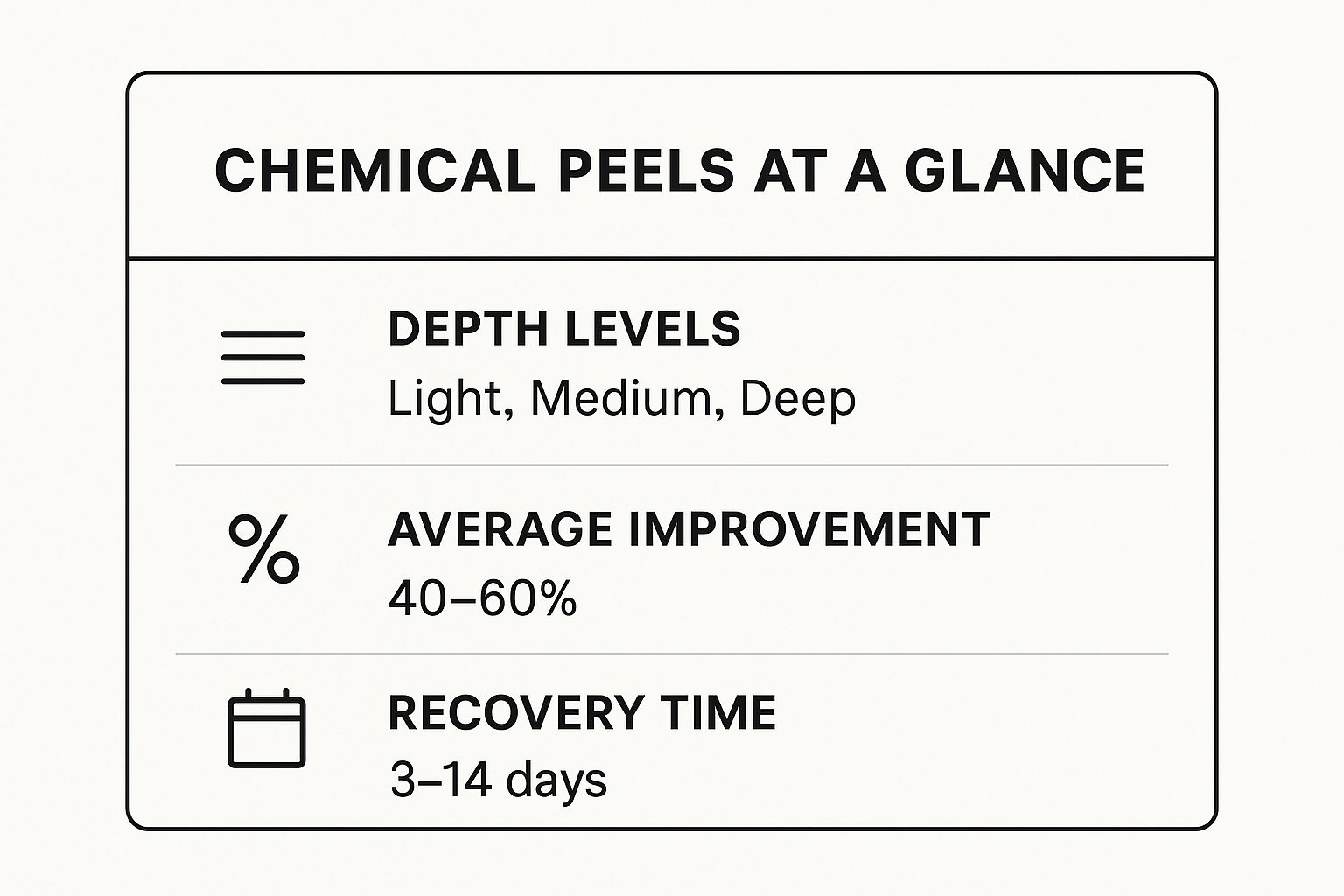
The visualization highlights that while recovery can range from a few days to two weeks, the potential for significant improvement makes peels a leading option.
Actionable Tips for Optimal Results
To ensure you get the most out of your chemical peel and minimize risks, proper preparation and aftercare are non-negotiable.
Expert Insight: The success of a chemical peel is just as dependent on post-treatment care as it is on the procedure itself. Diligent sun protection is the most critical factor in preventing complications and preserving your results.
Follow these essential guidelines:
Start Light: If you are new to peels, begin with a lighter, superficial peel to see how your skin reacts before committing to medium or deep-depth treatments.
Pause Actives: Discontinue the use of retinoids, AHAs, and BHAs at least 48-72 hours before your appointment to prevent over-exfoliation and sensitivity.
Embrace SPF: Your skin will be extremely vulnerable to sun damage post-peel. Apply a broad-spectrum SPF 30 or higher daily, even on cloudy days.
Time it Right: Schedule your peel series during the fall or winter months when you are likely to have less sun exposure.
To see real-world transformations and get a better sense of what to expect, you can explore the journey of others. You can learn more about chemical peel results on oliveskintherapy.com for a deeper understanding of the process.
2. Microneedling (Collagen Induction Therapy)
Often called collagen induction therapy, microneedling is a minimally invasive procedure that has become a gold standard for treating acne scars. It works by creating thousands of controlled micro-injuries in the skin using a device with fine, sterile needles. This process kick-starts the body's natural wound-healing cascade, dramatically boosting the production of new collagen and elastin, the essential proteins responsible for skin's structure and elasticity.
This controlled regeneration is precisely why microneedling is a superior facial for acne scars. As new collagen forms, it helps to "fill in" and remodel depressed or atrophic scars from the inside out, effectively smoothing the skin's surface and improving overall texture. Devices like the FDA-cleared SkinPen, developed by Bellus Medical, and advanced techniques popularized by figures like Dr. Desmond Fernandes have made this treatment highly effective and reliable.
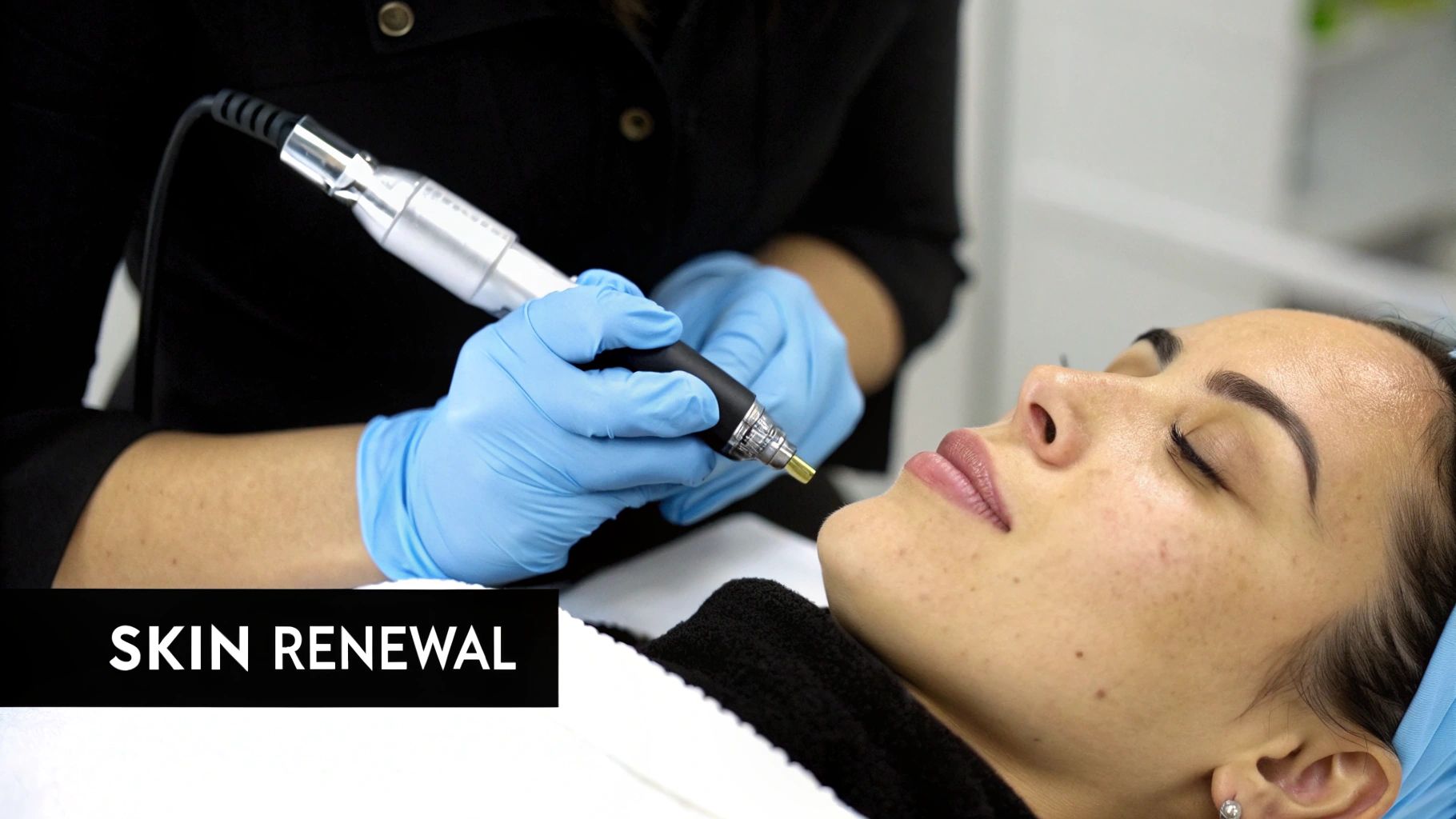
How Different Microneedling Techniques Target Specific Scars
The true power of microneedling is its adaptability to different scar types and depths, often enhanced with complementary technologies for even better results. A professional can customize the needle depth and technique to address your specific concerns.
For Rolling and Boxcar Scars: Standard professional microneedling, such as with a SkinPen, is exceptionally effective for these types of depressed scars. Studies have consistently shown a 30-50% improvement in scar appearance after a series of treatments. Another popular variation is the Vampire Facial, made famous by Kim Kardashian, which combines microneedling with Platelet-Rich Plasma (PRP) from your own blood to supercharge the healing and regenerative process.
For Deeper, More Stubborn Scars: For more significant textural issues and deeper scars, Radiofrequency (RF) Microneedling like Morpheus8 by InMode is a game-changer. This advanced treatment delivers RF energy through the needles deep into the dermis, creating thermal coagulation that tightens tissue and stimulates a more robust collagen response than microneedling alone.
Actionable Tips for Optimal Results
To maximize the benefits of your microneedling sessions and ensure a smooth recovery, preparation and dedicated aftercare are crucial.
Expert Insight: The 24-48 hours immediately following your microneedling session are the most critical. Your skin has open micro-channels, making it highly receptive to beneficial ingredients but also extremely vulnerable to bacteria and irritation.
Follow these essential guidelines for the best outcome:
Avoid Blood Thinners: Stop taking blood-thinning medications and supplements like aspirin, ibuprofen, and fish oil at least 24-48 hours before your treatment to reduce bleeding and bruising.
Space Treatments Properly: Allow your skin adequate time to heal and generate collagen between sessions. A schedule of one treatment every 4-6 weeks is the standard recommendation.
Hydrate Intensively: Immediately after treatment, apply a high-quality hyaluronic acid serum. This will help soothe the skin, reduce redness, and provide deep hydration through the newly created channels.
Be Gentle Post-Treatment: Use only gentle, fragrance-free cleansers and moisturizers for several days afterward. Avoid active ingredients like retinoids and exfoliating acids until your provider gives you the all-clear.
Proper aftercare is key to transforming your skin. You can find more details in these microneedling aftercare instructions on oliveskintherapy.com to ensure you are protecting your investment.
3. Fractional Laser Resurfacing
Fractional laser resurfacing is a highly advanced and effective facial treatment for acne scars, delivering targeted energy deep into the skin's dermal layers. The technology, pioneered by innovators like Dr. Rox Anderson and commercialized by brands like Solta Medical (Fraxel), works by creating thousands of microscopic treatment zones. These tiny, controlled columns of thermal injury remove damaged skin cells while leaving the surrounding tissue completely intact.
This "fractional" approach is the key to its success and safety profile. The untouched skin acts as a natural healing reservoir, dramatically speeding up recovery and stimulating a powerful collagen and elastin remodeling process. As the skin repairs itself, it replaces old, scarred tissue with new, healthy cells, leading to a significant improvement in scar depth, texture, and overall skin smoothness.
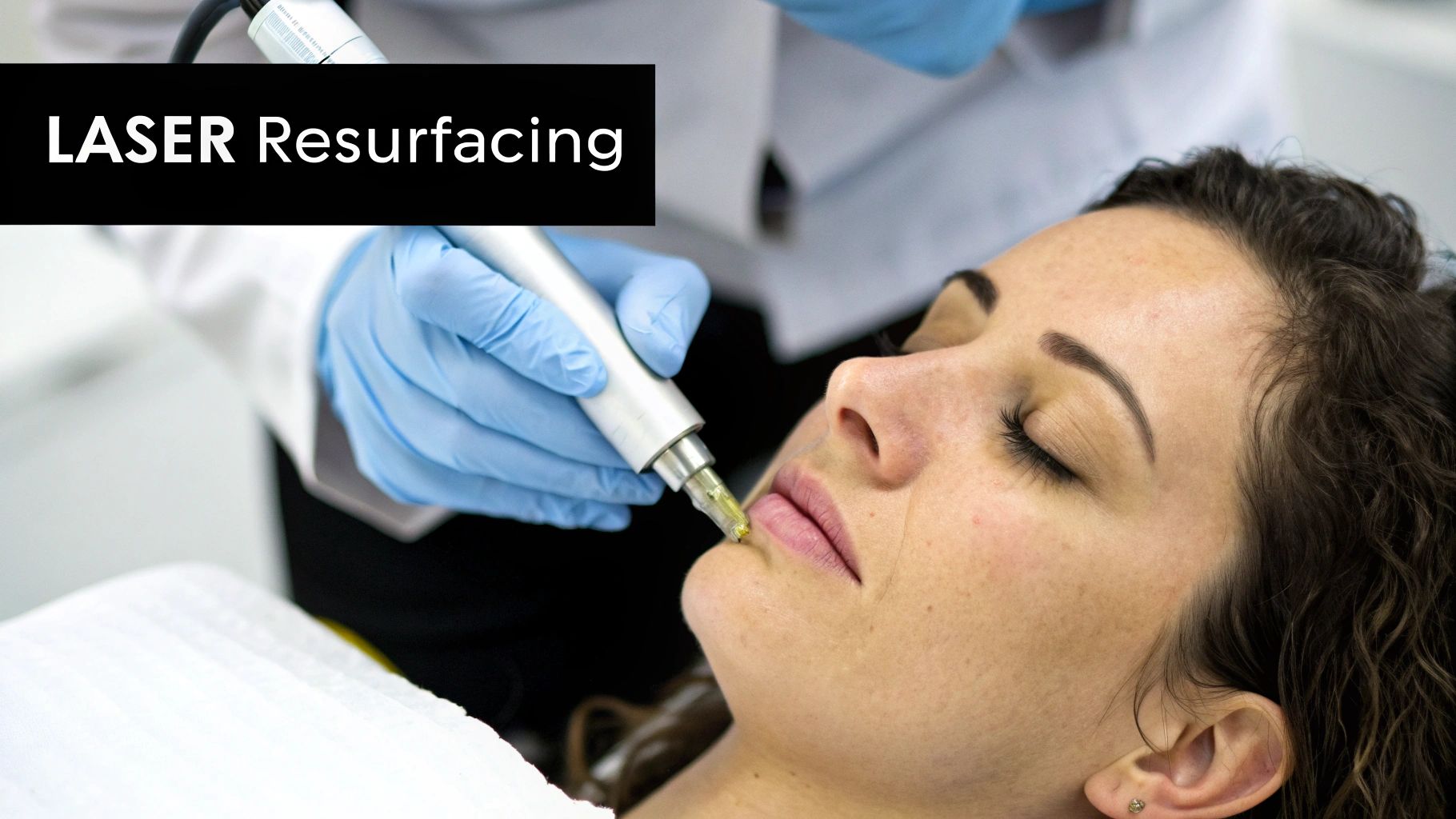
How Different Lasers Target Specific Scars
Fractional lasers come in two main categories: ablative and non-ablative. The choice depends entirely on the severity of your scarring, skin type, and tolerance for downtime. A qualified dermatologist or technician will recommend the best facial for your acne scars based on these factors.
For Moderate to Severe Scars: Ablative fractional lasers, such as the CO2 (Lumenis UltraPulse) or Erbium (Cutera Pearl Fractional), are the gold standard for deeper, more challenging scars. These lasers vaporize the tissue in the treatment columns, prompting a more intense healing response. They are particularly effective for stubborn boxcar and ice-pick scars.
For Superficial Scarring and Pigmentation: Non-ablative lasers, like the Fraxel Dual, are less aggressive. They heat the tissue without vaporizing it, stimulating collagen with minimal downtime. Studies on the Fraxel laser have demonstrated up to a 75% improvement in rolling scars and post-inflammatory erythema (redness) after a series of treatments. The Erbium fractional laser is also a gentler ablative option often favored for patients with more sensitive skin.
Actionable Tips for Optimal Results
Maximizing the benefits of fractional laser resurfacing requires strict adherence to pre- and post-treatment protocols. Your commitment to aftercare is crucial for a successful outcome.
Expert Insight: The healing phase after a fractional laser treatment is when the magic happens. Protecting the skin from the sun and keeping it intensely hydrated are the two most critical factors that will dictate the quality of your final results.
Follow these essential guidelines for a safe and effective treatment:
Avoid Sun Exposure: You must strictly avoid direct sun exposure and tanning beds for at least two weeks before and four weeks after your procedure.
Use Prescribed Skincare: Your provider will recommend specific gentle cleansers and occlusive ointments. Using these products religiously will prevent infection and support the healing process.
Manage Swelling: Applying cold compresses or ice packs for the first 24-48 hours can significantly reduce swelling and discomfort.
Consider Numbing Cream: A topical anesthetic is typically applied about an hour before the treatment to ensure your comfort. Don't hesitate to discuss this with your provider.
4. Subcision
Subcision is a highly specialized, minor surgical procedure designed to physically release the tethers that hold certain acne scars down. A dermatologist inserts a special hypodermic needle or a sharp-edged cannula beneath the skin, using it to break up the fibrous bands of scar tissue that pull the epidermis downward. This action frees the depressed scar, allowing it to rise and become level with the surrounding skin surface.
This mechanical release is what makes subcision an indispensable tool and one of the best facial treatments for acne scars of a specific type. By severing these anchors, the treatment not only smooths the skin's topography but also creates a space under the scar that pools with blood and healing factors. This controlled trauma stimulates new, healthy collagen production to fill the void, providing long-term structural support and preventing the scar from re-tethering.
How Different Subcision Techniques Target Specific Scars
The effectiveness of subcision hinges on selecting the right tool and technique for the scar in question. Developed by pioneers like Dr. David Orentreich, the procedure has evolved to treat different types of depressed scars with greater precision.
For Widespread Rolling Scars: Rolling scars, which create a wavy, undulating texture, are the primary target for subcision. A cannula subcision is often preferred for treating large areas. A blunt-tipped cannula is less traumatic than a sharp needle, reducing the risk of bruising and damage to blood vessels while effectively sweeping through and breaking up the diffuse fibrous bands responsible for these scars.
For Deeper, Tethered Scars: More defined depressions, like deep boxcar scars, may require a more aggressive approach. Nokor needle subcision uses a sharper, cutting needle to precisely target and sever the stubborn, individual fibrous tethers anchoring the base of the scar to the deeper tissue. Often, this is combined with dermal fillers like hyaluronic acid, which are injected into the newly created space to provide immediate lift and prevent the scar from reattaching.
Quick Reference: Subcision at a Glance
This quick guide summarizes the essential details you need to know about subcision as a treatment for acne scars.
The visualization highlights that while some bruising and swelling are expected, the procedure's ability to fundamentally restructure scar tissue makes it a cornerstone of advanced acne scar revision.
Actionable Tips for Optimal Results
To maximize the benefits of subcision and ensure a smooth recovery, proper preparation and post-procedure care are crucial.
Expert Insight: Subcision is fundamentally a collagen-stimulating procedure. Combining it with other collagen-inducing treatments like microneedling or radiofrequency, either in the same session or alternately, can create a synergistic effect for superior results.
Follow these essential guidelines:
Avoid Blood Thinners: Discontinue aspirin, NSAIDs (like ibuprofen), and certain supplements like fish oil or vitamin E for about a week before your appointment to minimize bruising.
Embrace Arnica: Using topical or oral arnica supplements a few days before and after the procedure can help reduce the severity and duration of post-treatment bruising.
Use Cold Compresses: Applying ice packs to the treated area for the first 24-48 hours will help manage swelling and discomfort.
Consider Combination Therapy: Discuss combining subcision with dermal fillers or biostimulators like Sculptra with your dermatologist. This not only provides immediate volume but also enhances long-term collagen synthesis.
5. Radiofrequency Microneedling
Radiofrequency (RF) microneedling elevates the concept of collagen induction to a new level, making it a powerful contender for the best facial for acne scars. This advanced procedure combines the physical action of traditional microneedling with the thermal energy of radiofrequency. As ultrafine needles create micro-injuries in the skin, they simultaneously deliver controlled RF energy deep into the dermis, heating the tissue to stimulate a more robust and uniform collagen and elastin production.
This dual-action approach not only breaks up scar tissue but also tightens the skin and remodels it from within. The thermal energy significantly enhances the body's healing response, leading to more dramatic improvements in scar depth and texture compared to microneedling alone. Pioneering devices from brands like InMode (Morpheus8), Vivace, and EndyMed have made this technology a go-to for dermatologists and estheticians treating stubborn scarring.
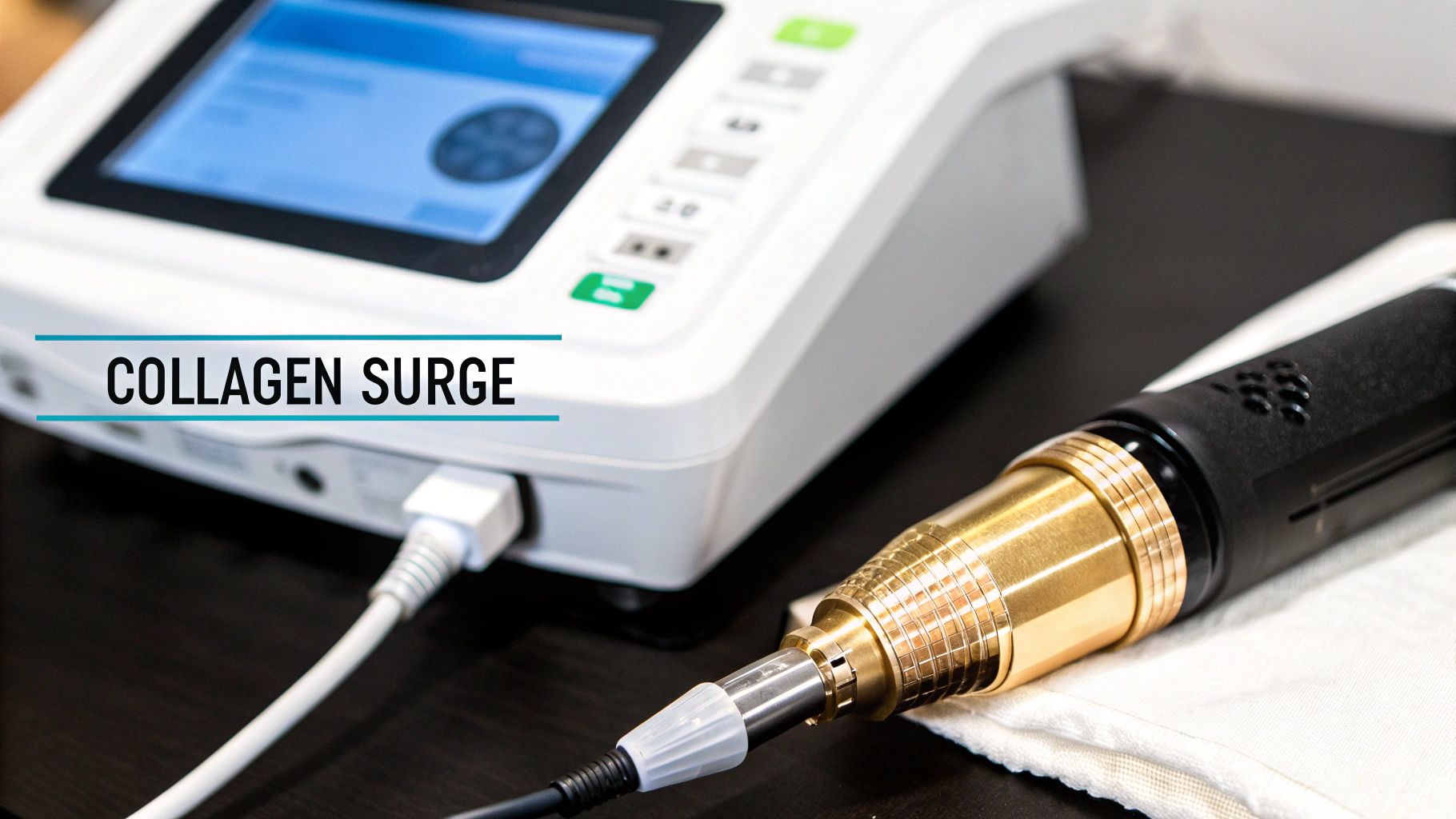
How Different RF Devices Target Specific Scars
The true strength of RF microneedling is its precision and adaptability. A provider can adjust both the needle depth and the intensity of the radiofrequency energy to create a highly customized treatment plan for your specific scar types.
For Deep Atrophic and Rolling Scars: A device like Morpheus8 is exceptionally effective. It can penetrate deeper into the subdermal tissue than many other devices, allowing it to remodel the foundational layers of the skin and fat, which is ideal for lifting and smoothing deeper, more contoured scars.
For Combination Concerns and Texture: The Vivace experience is often preferred for those dealing with not only scars but also fine lines, large pores, and overall textural issues. Its robotic motor ensures precise, even delivery, making the treatment more comfortable with less downtime.
For Sensitive or Thinner Skin: EndyMed Intensif uses non-insulated gold-plated needles, which deliver heat along their entire length. This provides a more distributed energy pattern, which can be beneficial for treating scars on sensitive skin areas without being overly aggressive.
Quick Reference: RF Microneedling at a Glance
This treatment is renowned for delivering significant results with manageable downtime. While some redness and swelling are expected for a few days, most patients can resume normal activities quickly, making it a practical option for busy lifestyles. The cumulative effects after a series of 3-4 sessions are typically profound, with improvements continuing for months post-treatment as new collagen forms.
Actionable Tips for Optimal Results
To maximize the transformative potential of RF microneedling, preparation and aftercare are crucial for supporting the skin's healing and remodeling process.
Expert Insight: The synergy between RF microneedling and post-treatment topicals is immense. The micro-channels created by the needles allow for superior absorption of growth factors and peptides, significantly accelerating and enhancing the collagen-rebuilding process.
Follow these essential guidelines:
Hydrate Intensively: Drink plenty of water in the days leading up to and following your treatment to support cellular function and healing.
Pause Harsh Actives: Stop using retinoids, exfoliating acids, and vitamin C serums for at least 5-7 days before and after your session to prevent irritation.
Soothe and Cool: Use cooling masks or a clean, cool compress in the first 24 hours to help minimize swelling and redness.
Amplify with Peptides: Apply a growth factor or peptide-based serum post-treatment, once your provider gives the okay, to provide your skin with the building blocks it needs for repair.
For those looking to supercharge their results, combining this treatment with other modalities can be highly effective. You can find out more by exploring how RF microneedling with PRP can transform your skin on oliveskintherapy.com for a comprehensive look at this powerful combination.
6. Dermal Fillers for Acne Scars
Dermal fillers offer an innovative and immediate solution for specific types of acne scars, making them a unique option among the best facials for acne scars. This procedure involves strategically injecting a gel-like substance, typically hyaluronic acid, directly beneath a depressed scar. This adds volume to the area, instantly lifting the indented skin to make it level with the surrounding surface.
Unlike treatments that rely on gradual collagen remodeling, fillers provide a near-instant cosmetic improvement. They work by physically filling the void left by lost collagen and fat after severe acne has healed. Leading brands like Allergan's Juvederm and Galderma's Restylane have developed a range of filler densities, allowing practitioners to precisely match the product to the scar's depth and type for a natural-looking result.
How Different Fillers Target Specific Scars
The effectiveness of dermal fillers comes from selecting the right product for the right type of atrophic scar. A skilled injector will assess the scar's characteristics to choose a filler that provides both lift and smooth integration with the skin.
For Deep, Defined Scars: Deeper, atrophic scars like boxcar scars often benefit from a thicker, more robust filler such as Juvederm Ultra Plus or Restylane Lyft. These fillers have the structural integrity to lift the tethered scar tissue and hold its new shape.
For Widespread Volume Loss and Rolling Scars: For broader, wavier depressions known as rolling scars, a smoother, more flexible filler like Restylane Refyne can be used to even out the contour. For overall volume loss associated with scarring, a biostimulatory filler like Sculptra (poly-L-lactic acid) can be used. Sculptra works differently by stimulating your body’s own collagen production over several months, providing a gradual and longer-lasting improvement.
Quick Reference: Dermal Fillers at a Glance
This quick summary highlights the key aspects of using dermal fillers for acne scar treatment.
The visualization underscores that fillers provide instant gratification with very little recovery time, making them an excellent choice for targeted scar revision.
Actionable Tips for Optimal Results
To maximize the benefits of your filler treatment and ensure a smooth recovery, proper preparation and aftercare are crucial.
Expert Insight: The most significant advantage of fillers is their ability to provide immediate results. For the best outcome, filler treatment is often combined with subcision, a procedure that releases the fibrous bands pulling the scar down, allowing the filler to lift the skin more effectively.
Follow these essential guidelines for a successful treatment:
Prepare Your Body: In the week leading up to your appointment, avoid blood thinners like aspirin, ibuprofen, fish oil, and vitamin E to minimize the risk of bruising. It is also wise to avoid alcohol for 24-48 hours beforehand.
Manage Swelling: Gently apply a cold compress or ice pack to the treated areas for short intervals during the first 24 hours to reduce swelling and discomfort.
Follow Post-Treatment Instructions: Your provider may recommend gently massaging the areas to ensure the filler integrates smoothly. Avoid strenuous exercise and excessive heat for the first 24-48 hours.
Consider Combination Therapy: Discuss combining fillers with other treatments like microneedling or laser resurfacing. Fillers lift the scar, while other modalities can improve the overlying skin texture for a comprehensive result.
For a deeper dive into how different fillers work and what to expect, you can learn more about the science behind fillers at allure.com to better understand their role in aesthetic medicine.
Top 6 Acne Scar Facial Treatments Comparison
Treatment Type Implementation Complexity Resource Requirements Expected Outcomes Ideal Use Cases Key Advantages Chemical Peels Moderate (requires skill for depth) Acid solutions, trained staff 40-60% improvement over multiple sessions Mild to moderate acne scars, multiple skin concerns Affordable, customizable, minimal downtime (light peels) Microneedling (Collagen Induction Therapy) Moderate (needle depth control) Microneedling device, optional serums/PRP 30-50% gradual improvement over months All skin types, mild to moderate scars Safe for all skin tones, minimal downtime Fractional Laser Resurfacing High (requires expert operator) Laser equipment, experienced practitioner Up to 75% significant improvement, long-lasting results Severe scarring, mixed texture and pigmentation Powerful single-session results, precise depth control Subcision Moderate (minor surgical skill needed) Needle/blade, skilled dermatologist Immediate visible improvement Rolling and boxcar scars tethered by fibrous bands Immediate effect, repeatable, good for tethered scars Radiofrequency Microneedling High (device operation and settings) RF microneedling device Superior collagen stimulation, 3-7 days recovery Deeper scars, all skin types Combined mechanical + thermal effect, minimal hyperpigmentation risk Dermal Fillers for Acne Scars Low to moderate (injectable skill) Injectable fillers, trained injector Instant volume restoration, 6-18 months duration Deep, isolated depressed scars Immediate results, minimal downtime, reversible fillers
Crafting Your Custom Plan for Clearer Skin
Navigating the world of advanced skincare can feel overwhelming, but finding the best facial for acne scars is an achievable goal when you are armed with the right information. As we have explored, the most effective path to smoother skin is rarely a straight line. It is a customized journey that considers the unique characteristics of your scars, your skin type, and your long-term aesthetic aspirations.
The key takeaway is that there is no single "best" treatment for everyone. Instead, the power lies in strategic combination and personalization. Atrophic scars like boxcar and rolling scars may respond exceptionally well to volume-building treatments like microneedling or dermal fillers. Deeper, tethered scars often require a foundational approach like subcision to release the scar tissue before other resurfacing treatments can be truly effective.
Key Principles for Success
To move forward with confidence, keep these core principles at the forefront of your planning:
Identify Your Scar Type: This is the most critical first step. Is your scarring primarily atrophic (indented), hypertrophic (raised), or a mix of post-inflammatory hyperpigmentation? Different treatments target different issues.
Embrace a Multi-Modal Approach: The most dramatic and lasting results often come from a synergistic plan. Think of combining a collagen-stimulating treatment like microneedling with a texture-refining chemical peel spaced weeks apart. Or, consider using subcision to break up deep tethers, followed by a dermal filler to restore lost volume in a single session.
Prioritize Professional Guidance: Attempting to self-diagnose and treat complex scar tissue is risky and can lead to disappointing results or even further damage. A licensed esthetician or dermatologist can provide an accurate assessment and create a safe, effective roadmap tailored to you.
Your Actionable Next Steps
Your journey toward clearer skin begins with a plan. Start by taking high-quality photos of your skin in natural light to document your starting point. Write down your primary concerns and what you hope to achieve. Are you focused on texture, discoloration, or deep indentations?
This preparation will make your initial consultation incredibly productive. You can articulate your goals clearly, allowing a professional to match them with the most appropriate technologies, whether it's fractional laser resurfacing for comprehensive texture renewal or radiofrequency microneedling for powerful skin tightening and collagen remodeling. Mastering this proactive approach ensures your investment in professional treatments yields the best possible return, moving you closer to the smooth, confident complexion you deserve. The path forward is not about finding a quick fix, but about building a sustainable, long-term strategy.
Ready to move from research to results? The experts at Olive Skin Therapy specialize in creating personalized treatment plans for acne scarring, combining advanced techniques like microneedling, chemical peels, and more. Schedule your consultation at Olive Skin Therapy to build a custom strategy and take the first definitive step toward leaving acne scars in the past.